If you don’t, it’s probably similar to what you can imagine about it.
From the outside, it all looked so good. My parents bought one of the most well-known landmark properties in town, on the corner of Old Cutler and Ludlum. We barely even needed an address, everyone knew the house.
The rock wall surrounding it, at the corner of the neighborhood that extended behind it full of all the regular houses, the lush yard, perfect for parties, shooting cans in the backyard and burying pets that died over the years.
Our house was special.
From the inside, it was confusing. The house was mid-renovation. I’d walk downstairs in the middle of the night to get a drink of water from the kitchen, turn on the light, and the cockroaches would scatter.
The electricity would get turned off because my dad didn’t pay the bill. My mom held art classes in our garage to make extra money. But, we always had a nanny living with us, either in the apartment over the garage or right in our house.
My dad always had a new (used) car in the driveway, a Corvette, then an El Camino, then a Mercedes. My mom took me shopping at Bloomingdales, where I could only watch her shop, and not buy anything myself. My clothes came from K-Mart.
Were we poor or were we rich?
I couldn’t figure it out.
When I was in fifth grade, my dad went to jail for selling false dreams to retirees. Everything was wiped out for the people he’d conned, and that included my mother, my sister, and me.
Reading the depositions from his case was fascinating to me, and it’s what led me down the path to law school. I loved reading. And my dad loved his lawyers. So, naturally, I’d go to law school and become a prosecutor. Or, years later, as a teenager, supporting my parents to navigate their divorce, I thought I’d become a family lawyer, but the kind that handles divorces.
If I ever thought of inheritance, it was never in the context of my own life. I was clearly on my own, not an inheritor.
I started working at 14, bought my first car at 15 so that I could get it all ready and learn to drive stick in time for my 16th birthday, put myself through college as a waitress, worked in my dad’s call center one summer booking appointments for him to go meet homeowners he could sell texture coating for their homes (is that stuff even real?!), and then paid my way through law school with a combination of grants, loans and work for Westlaw making sure the printers’ had paper and ink.
Here’s what’s interesting though: I was an inheritor. My dad’s mom did help me pay for some of college and a little of law school. It wasn’t a lot. But it was something. There was a way my dad downplayed it because he resented that his mom didn’t help more, so I didn’t fully appreciate it either.
From my dad, I inherited a lack of appreciation for what I did receive, a sense of entitlement to more, and a deeply embedded consciousness of victimization.
I also inherited my dad’s sharp mind, and his ability to hustle. I’d use both well.
The Chaos Behind the Plan
Before starting Georgetown, I had a premonition, or maybe it was a self-fulfilling prophecy (I’ve never been quite clear on the difference between the two), that I’d graduate first in my class. But, I felt like the stupidest person in my class, convinced myself I failed every exam, and that drove me to study more than anyone else.
In May of 1999, I walked down the graduation aisle as a Summa Cum Laude graduate of Georgetown Law with the highest grade average in my class. Law school had turned on some kind of a competitive streak in me that I didn’t know existed previously.
It started to become clear that winning the law school game meant getting a job in BigLaw. I spent my second summer at Irell & Manella in Los Angeles, and then, oh so pregnant, the summer after law school at Skadden Arps in DC, before getting recruited to start my career as a full-fledged attorney at Munger Tolles & Olson.
Munger was one of the most prestigious firms in the country, certainly the hardest to get a job at, and they had an estate planning department. I chose estate planning because it was as close to family law as I could get working for BigLaw. And, it seemed like the invulnerable perch from which I could protect families from the kind of havoc that had wrecked mine.
While I was there, I realized something shocking.
The same estate planning process that resulted in my family getting stuck in court and conflict after my father-in-law died, the very process that I thought was malpractice, was the exact process for estate planning that we were using and delivering.
Precise language in thick binders with the gravitas of vault doors. But behind them was disorder. Assets scattered across accounts, advisors, and assumptions. Financial advisors and attorneys operated in parallel, not together.
Clients signed documents, believing the job was finished. But when assets changed, the plans didn’t. When someone died or became incapacitated, families often had no coordinated inventory, no clarity about titling, no integration between their legal, insurance, financial and tax decisions.
That’s when I realized: The system wasn’t malfunctioning. It was functioning exactly as designed. And there were gaping holes.
Building, and Walking Away
So I left and built my own. By then I had two babies, and I saw a gap no one was addressing: what happens to minor children in the first hours after a crisis?
My own estate plan would have left my kids in the care of strangers. I had named long-term guardians in my will, but if the authorities showed up at my house, they’d have no choice but to take my kids into the care of strangers while they figured out what to do. That was absolutely unacceptable to me.
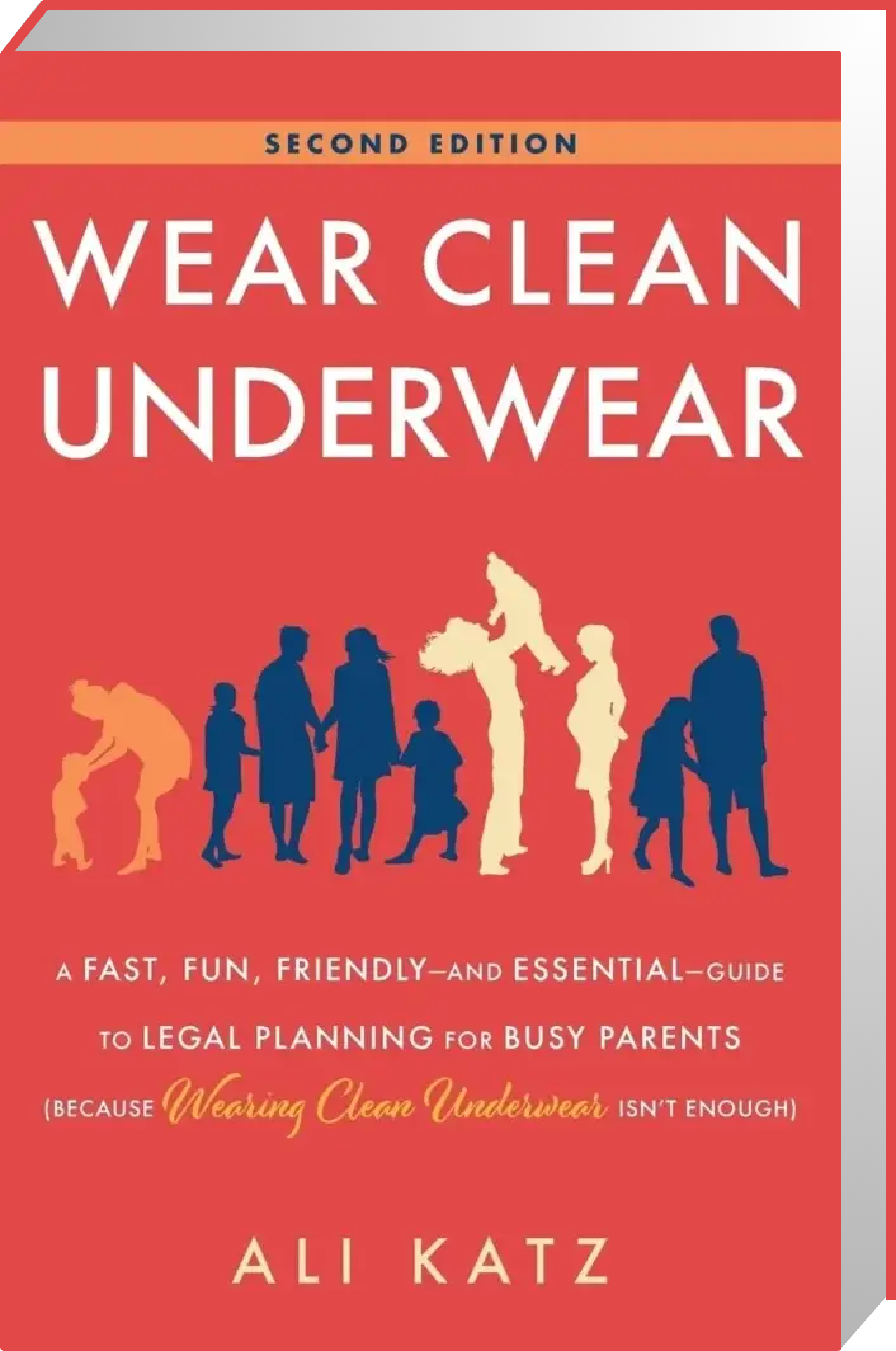
So I built a system that sealed that gap. The Kids Protection Plan®. Clear authorizations, accessible instructions, immediate authority, exclusion of anyone that should never serve. While most lawyers I consulted said it would never succeed, most parents understood the difference immediately. My law practice grew fast. Within three years, it was generating seven figures and I began training lawyers across the country. I wrote a best-selling book on legal planning for families, and appeared on television regularly as a family, financial, and legal expert. I built a second seven-figure company.
But that promise I’d made to myself – to never to repeat what my father did – had become its own kind of pattern. Even after Georgetown, even after building two businesses that genuinely helped families and the lawyers who served them, I carried a deep, quiet fear: what if my work wasn’t actually valuable? What if I was just really good at selling? What if estate planning wasn’t truly valuable? What if I was just repeating what I’d inherited?
I chose to turn towards my greatest fear - the fear of running out of money - and walk away from everything I’d built, and spend a year doing only what I would do for free, if I wasn’t motivated at all by money, to answer the question.
What I Discovered About Estate Planning, Inheritance and Legacy
When I walked away, a number of significant synchronicities occurred all at the same time to show me that:
- My work teaching lawyers to offer estate planning was extremely valuable, but I would have to teach them more than just sales, marketing and how to serve families with young children;
- Real estate planning, the kind that works to keep families out of court, chaos and conflict was about far more than a set of legal documents that only focused on death and would likely fail when the family needed them;
- Our collective relationship to money had created a trap through the distortion field of what I’ve come to identify as "money dysmorphia" – the distorted view we have around money that causes us to sacrifice our non-renewable resources, individually and collectively, in service to money, which is infinitely renewable when we know how to come into right relationship with ourselves, each other and the planet.
When I re-entered the world after the descent into my dark night of the soul, and a year living on a farm with my kids, only doing what I would do for free, I made the choice to take on the challenge of reinventing estate planning so the entire process would provide real value (not just for families with young children) and I took on my own legal and financial planning as a rite of passage and initiation into the adulthood my parents had never really grown into themselves.
Stripped of everything, the insight clarified: Wealth transfer is not a document problem. It is a coordination problem. And what we inherit from our families goes far deeper than money: the patterns, the silence, the stories we tell ourselves about what we deserve.
How I Asked My Mother to Invest in Me
When I started rebuilding, I needed help. I had ruined my credit score, and I needed money to rebuild. While I knew how to sell to earn money, I was committed to only selling what I believed in 100%, and to live fully in alignment with my values. I’d need to borrow so I could build before I started to sell again. After turning to everyone else I knew, the last place to look was to my mother.
My mom and I had a challenging relationship. On top of that, she didn’t have money to give. She was an art teacher and at 70+ still hadn’t retired because she needed the paycheck. After 30 years working, raising me and my sister without financial support from our dad, she had barely $200,000 saved for retirement. So I got creative. I showed her the lessons I learned through the choices I’d made, the numbers, the plan, the structure. She agreed to invest in me, using the credit score she’d worked so hard to protect over her entire life.
She said no at first. Then she said yes. You can watch how I met my mom in her no, and turned it into a yes here.
That decision rebuilt more than a company. It healed our relationship. Money was no longer silence or leverage. Today, thanks to her investment, my mom was able to retire from her job, and has the money she needs to live her best life.
Most importantly, we’re doing it together - me, my mom and sister, in alignment.
What Wealth Is Really For
With $150,000 in business credit, I built the foundation of my family wealth company portfolio. Today, through multiple legal training, estate and financial planning companies, we help families navigate the Great Wealth Transfer. More than 800 Personal Family Lawyer firms operate within our framework, having served over 500,000 families so far. Together they have generated more than $2.4 billion in revenue while keeping over $25 billion in family assets out of courts and conflict.
But scale is not the point. Integration is.
Legal, insurance, financial, and tax planning must function as a coordinated system. Estate planning is a living system, not a set of documents created once, put on a shelf or in a drawer never to be looked at again. It’s a conversation, not signatures. It’s a regular process of review and update. It’s inventories and instructions. And, care. Wealth must move while people are still here to guide it.
I am living these principles in my own life, supporting my children to grow into adulthood through the rites of passage and initiations I wish my parents had been able to give me. This is their inheritance, and the legacy I’m creating now.
For generations, money in my family was used to create illusion or control. It appeared suddenly and vanished just as quickly. It was hoarded, hidden, weaponized.
I use money differently. I make sure I have what I need, then everyone in my eco-system has what they need, and only then do I say yes to what I want, on the way to a future in which we can all have what we want.
Resources are shared with structure. Authority transfers gradually. Expectations are explicit. Accountability moves both directions. That is a living legacy: not assets sealed away, not power withheld, but infrastructure built between generations.
Each one of us deserves to make decisions with our eyes wide open, and it’s time for us all to see ourselves as inheritors of the past, creating the best possible future with our wise choices now.
The conversations may feel hard, but I’m here to make it easier.
I build systems that connect, and endure.
So can you.